
DurexEd
UX Design Student Project | February - March 2019
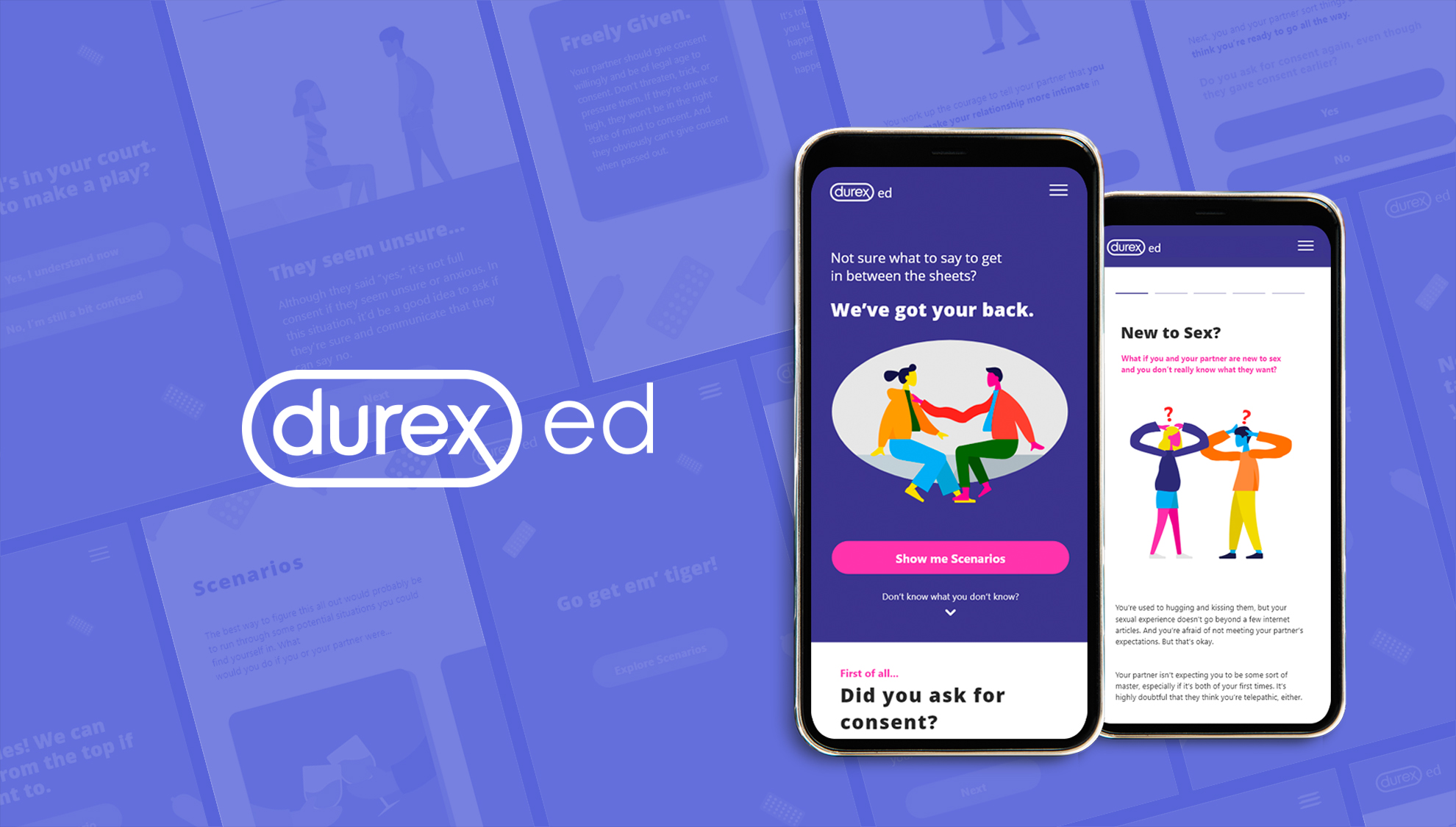
DurexEd is a microsite that employs casual language and fun imagery to facilitate communication around the topic of consent for high school teens. It aims to empower teenagers whenever they make choices around both their emotional and sexual well-being.
Note: Though this design concept utilizes the Durex brand, it is purely conceptual and is in no way affiliated with or endorsed by Durex.
Team
Ashwin Birdi
Project Manager
Delicia Li
Art Director
Tiffany Chan
Art Director
Arth Bhattarai
UI Designer
Roles
User Research
Data Analysis
UI Design
Prototyping
Copywriting
Animation
Tools
Illustrator
Photoshop
Xd
Figma
Domain Problem
Intimacy and emotional health are essential parts of romantic and sexual relationships. However, high school sexual education curriculums neglect to discuss these topics with students, focusing instead on topics such as anatomy, the mechanics of intercourse, and STIs.
This lack of discussion on emotions and intimacy have many deeming high school sexual education as insufficient, as teens are left ill-equipped to navigate relationships long term.
Brand Opportunity
Why Durex?
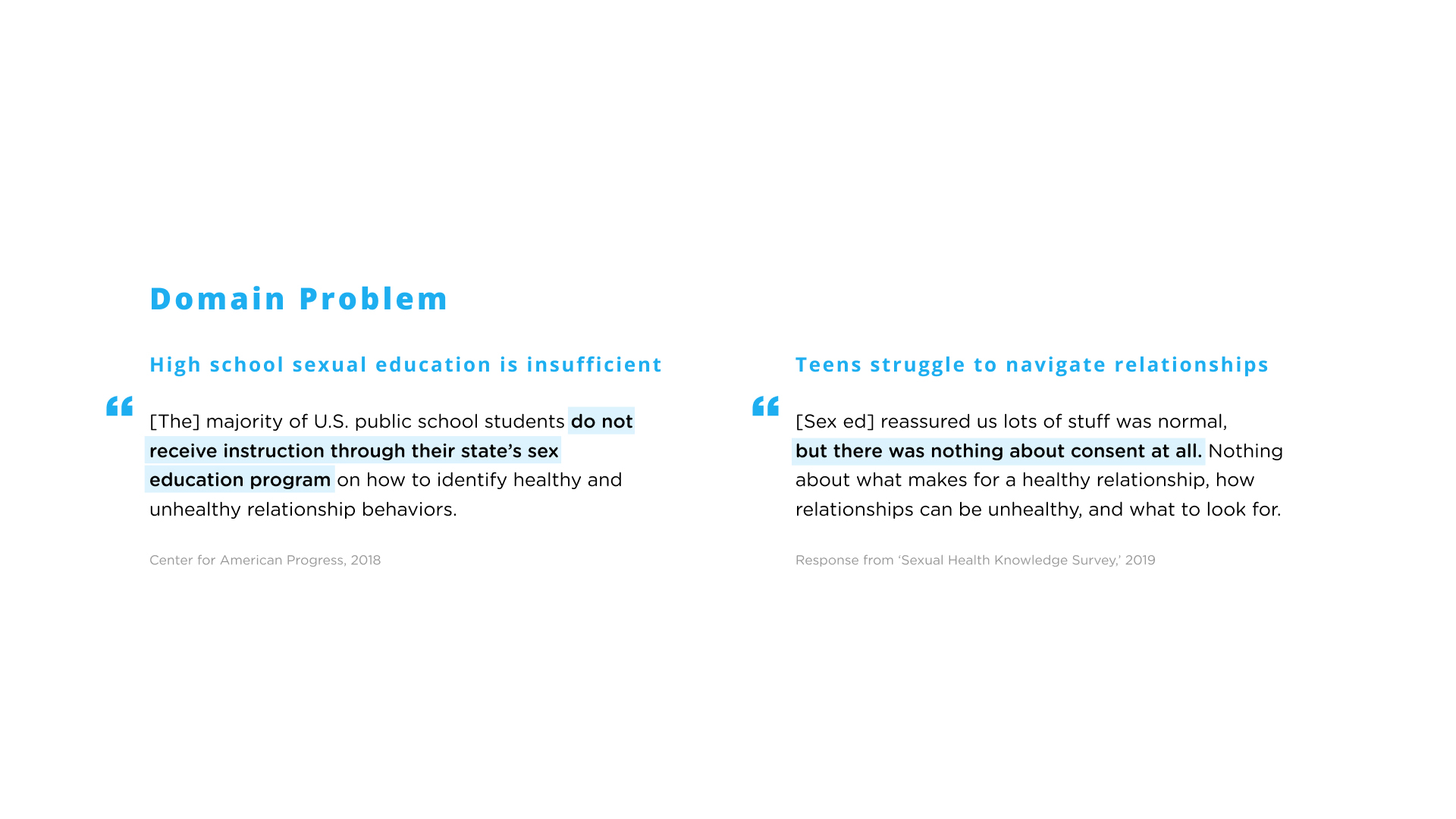
Like many of its competitors, Durex's brand highlights pleasure and intimacy. Durex wants to shift its branding towards sexual well-being, however, gaps in their marketing campaigns and communication channels contradict this goal.
Given the inadequacy of high school sexual education, there is an opportunity for Durex to destigmatize anxieties surrounding sexual health. By focusing on safety and education, Durex could open up conversations about topics that schools fail to mention.
Research Insights
To collect qualitative data, I helped with interviewee recruitment, designed interview questions, and was in charge of note taking for user tests. I also designed survey forms and questions, and posted them to social media platforms such as Facebook and Reddit to gather quantitative data.
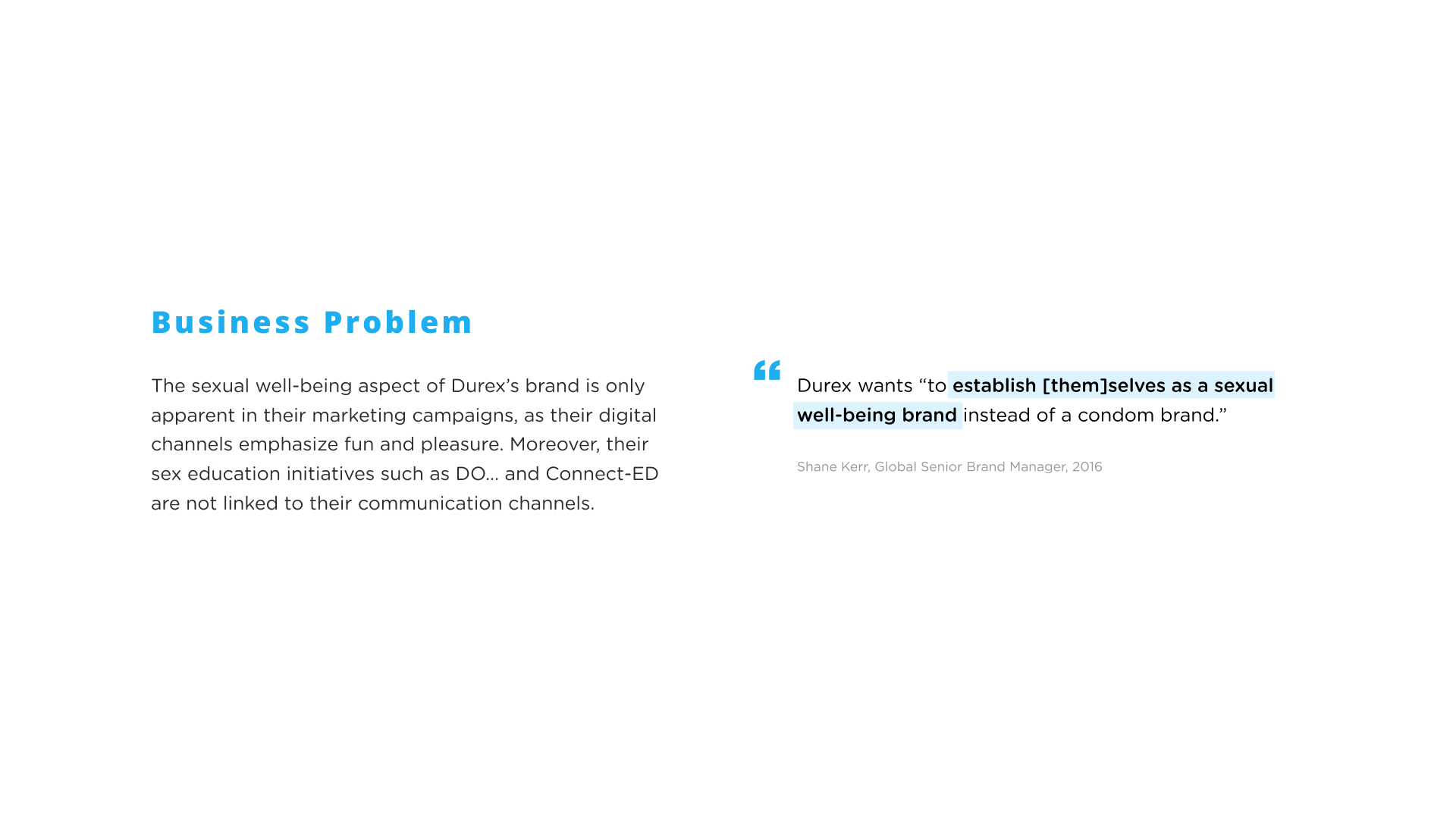
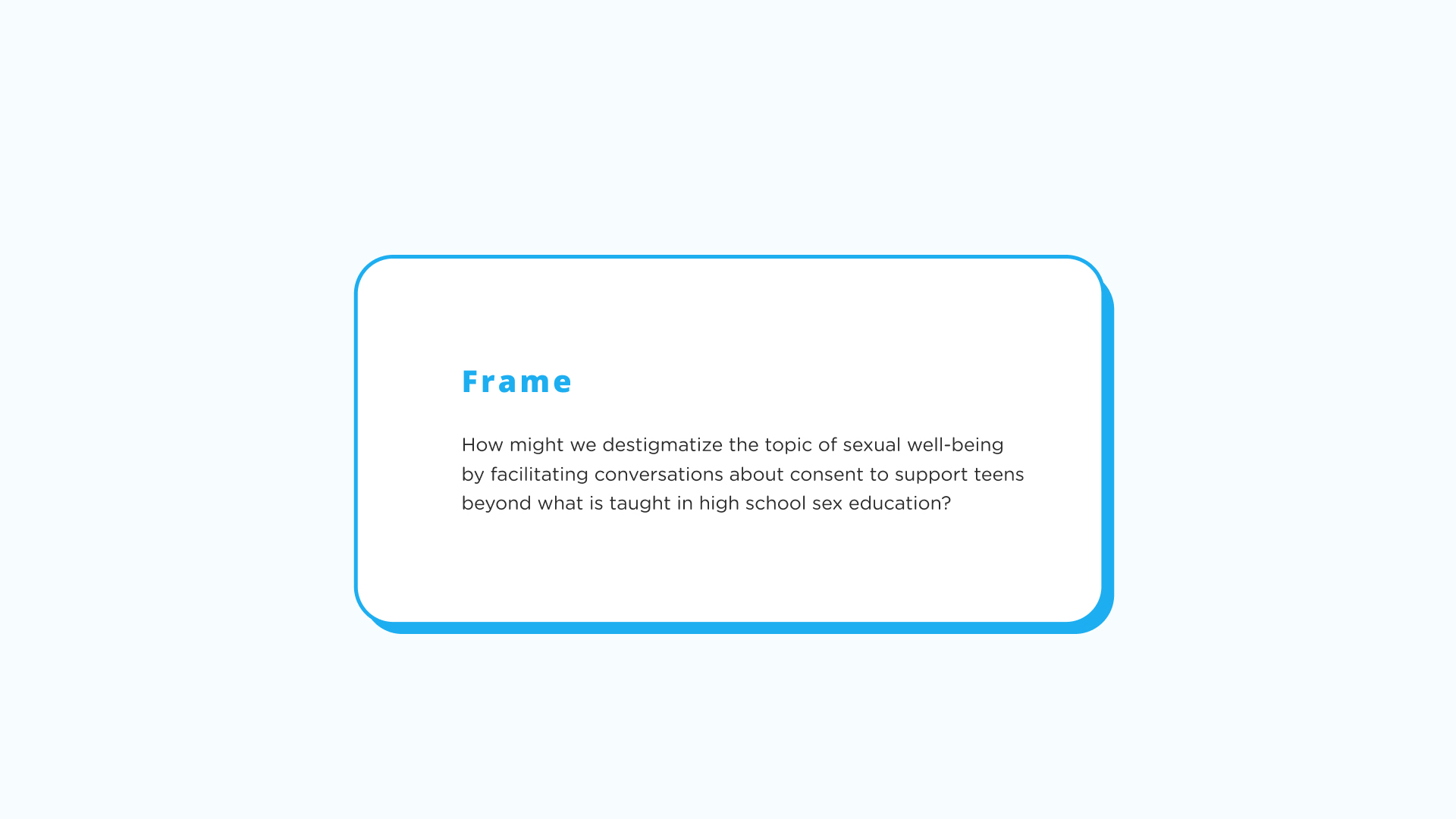
I then helped take our team's research results, and we compiled and analyzed them to find the following insights, particularly around consent: consent is highly appreciated yet rarely taught, and is critical for safety and well-being. This allowed us to create a frame for our project:
Persona
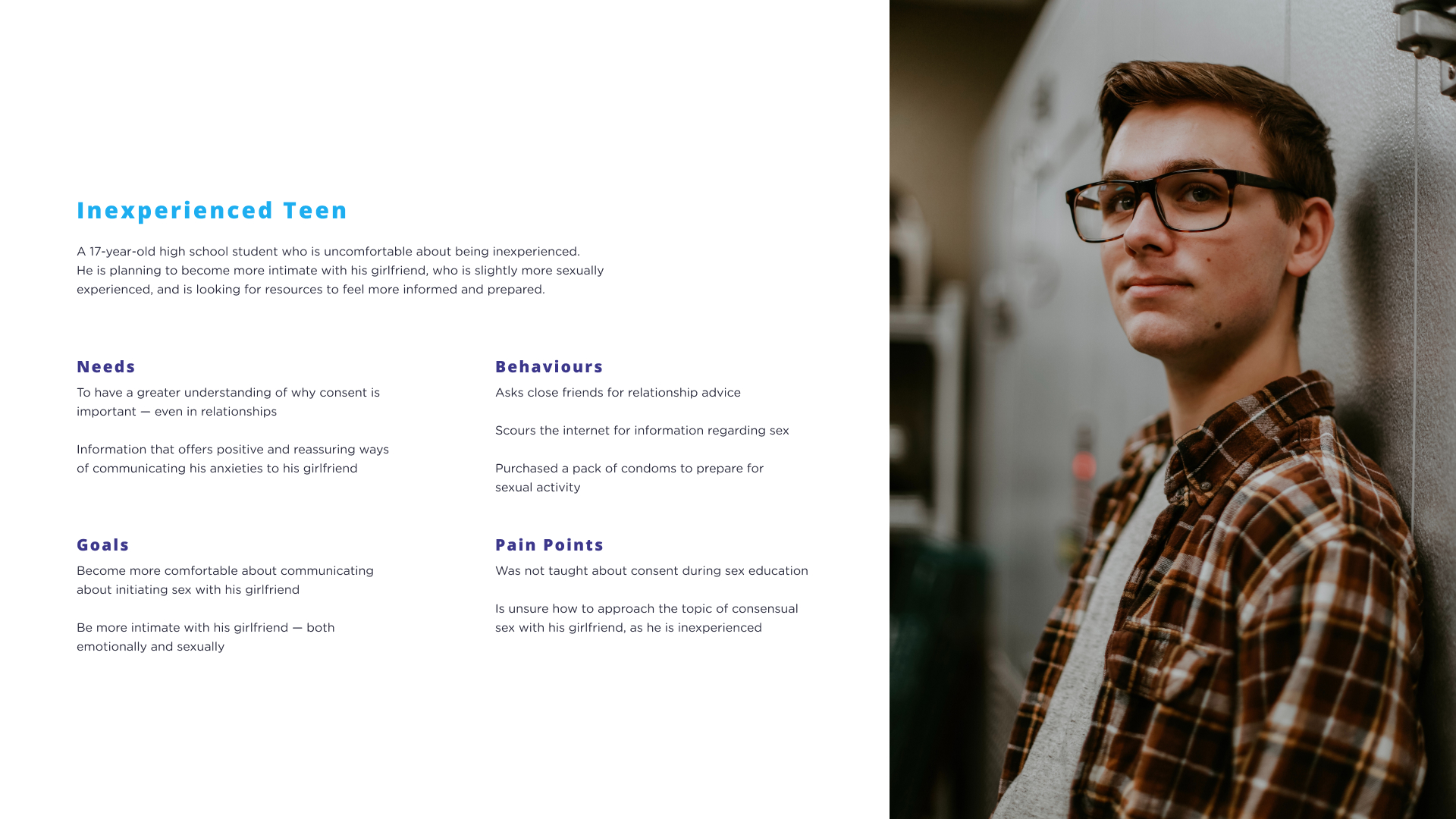
By drafting an inexperienced high school student persona from our research notes, we realized that our solution would best support our target audience by being educational in a casual and reassuring manner to help normalize sex and conversations about consent.
User Journey
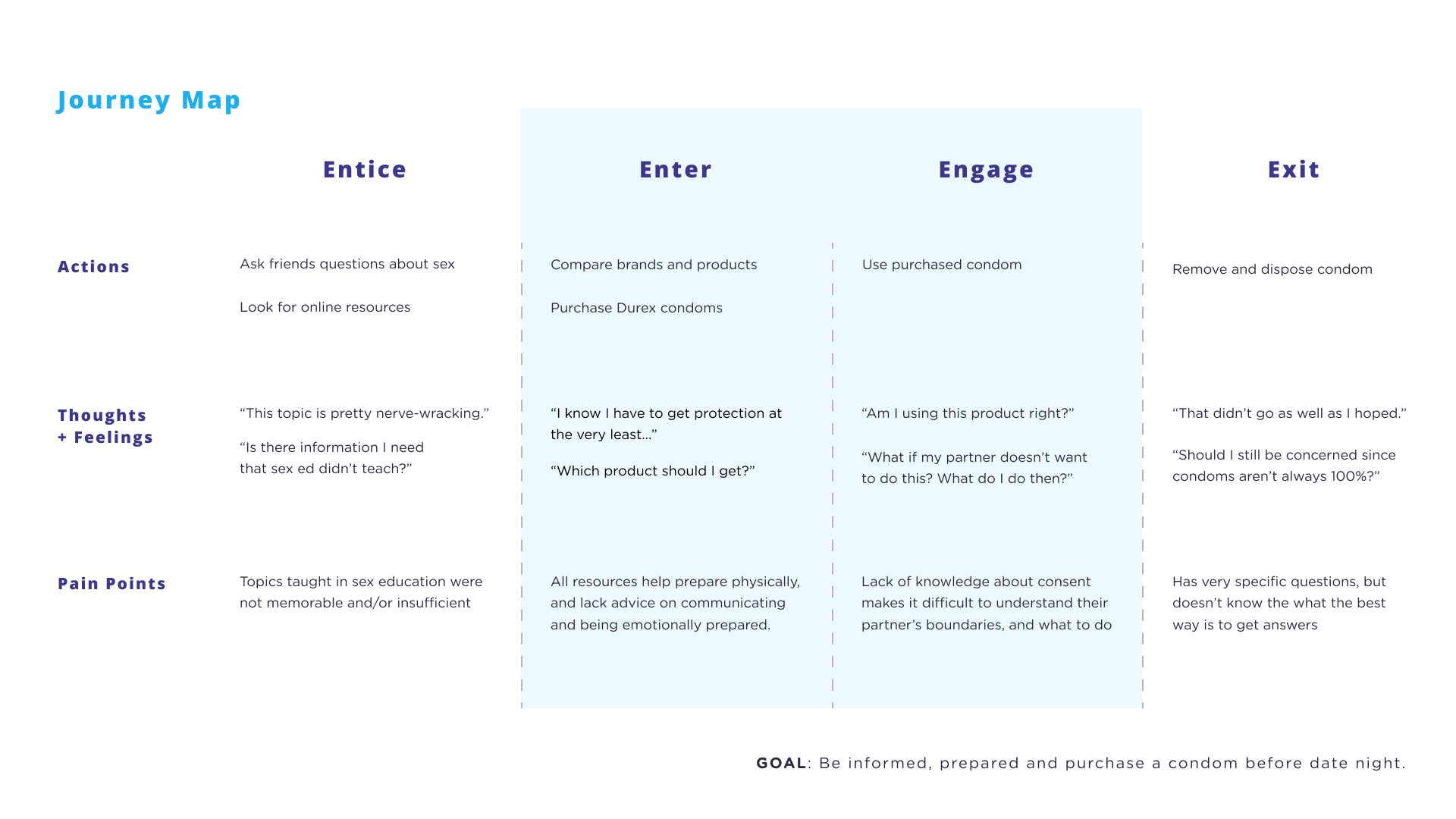
Based on an experience that our persona might undergo, we determined the point of intervention to be committing to and engaging in sexual intercourse. We decided to focus here to educate on consent, and to start conversations about it between partners.
Guiding Principles
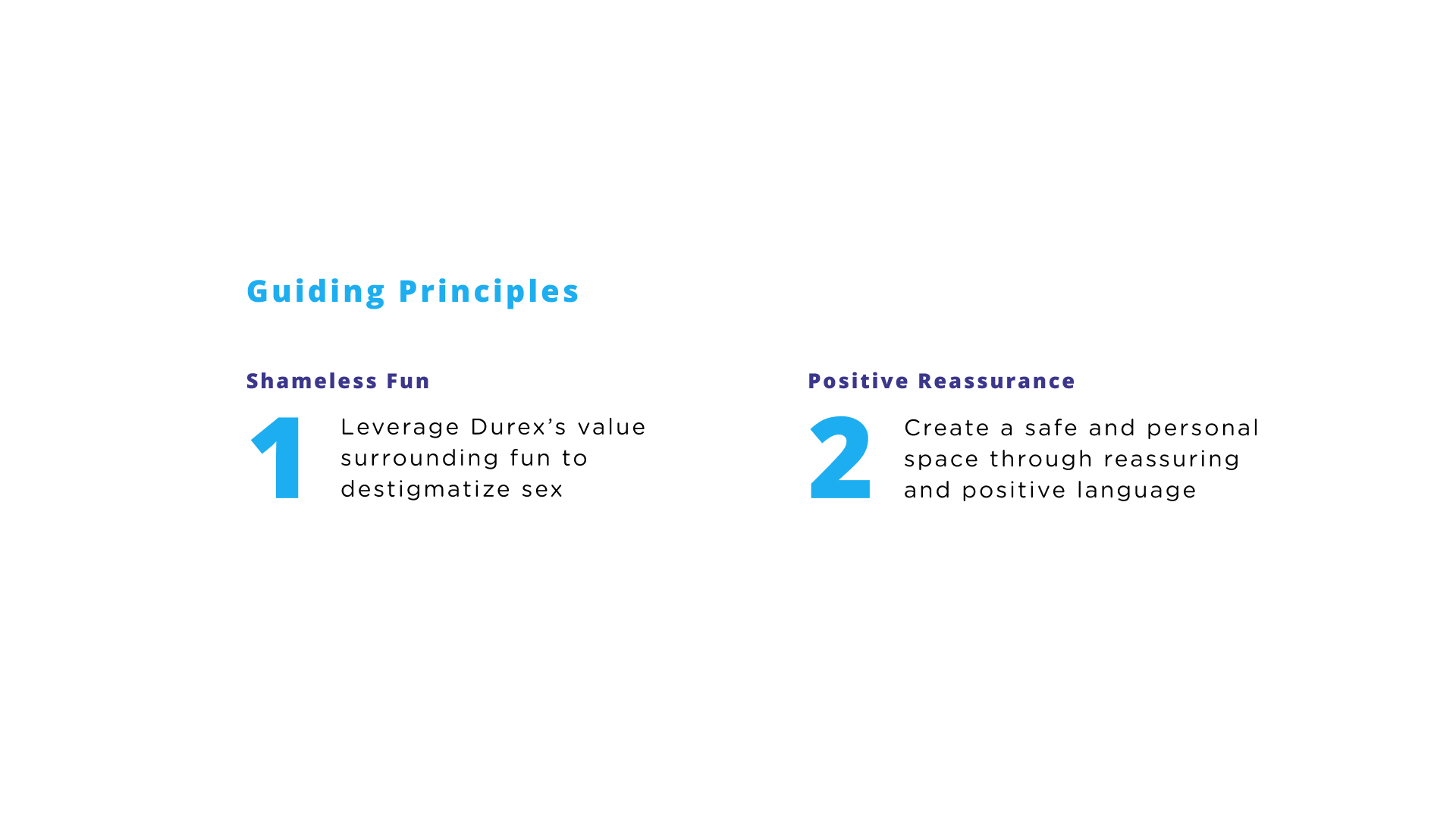
After having decided on the point of intervention, our team created two guiding principles to help influence the design decisions of our solution: Shameless Fun and Positive Reassurance.
Prototyping
UI Design & Animations
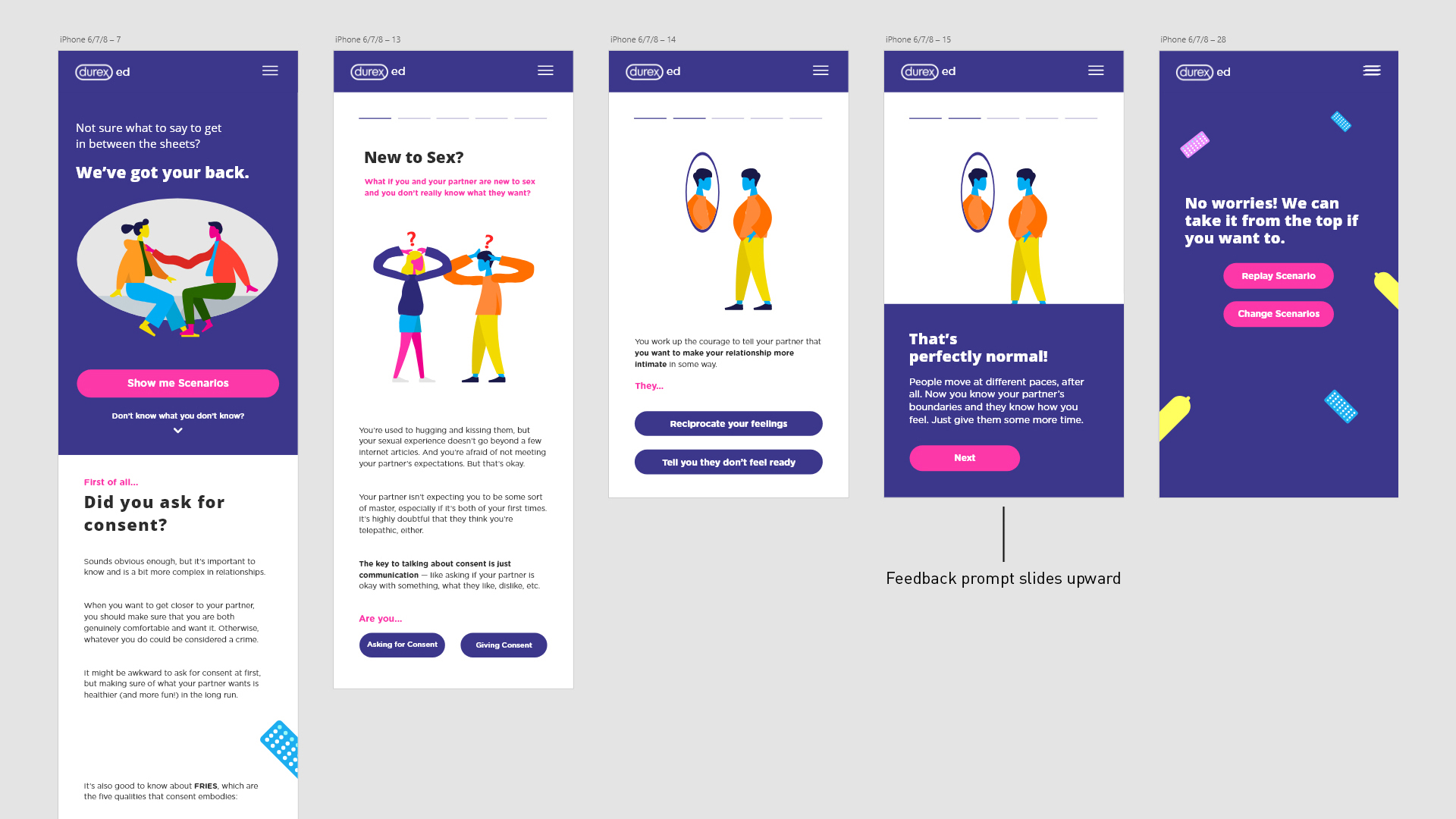
With our persona, user journey, and guiding principles in mind, I got to work on the interfaces and animations of our solution using Figma and Adobe Xd. The screens that I worked on include the landing, scenario, and feedback pages.
I was also the primary copywriter for our solution, ensuring that the copy followed our guiding principles and brand voice by being informal, humorous, and supportive.
Solution
Landing Page
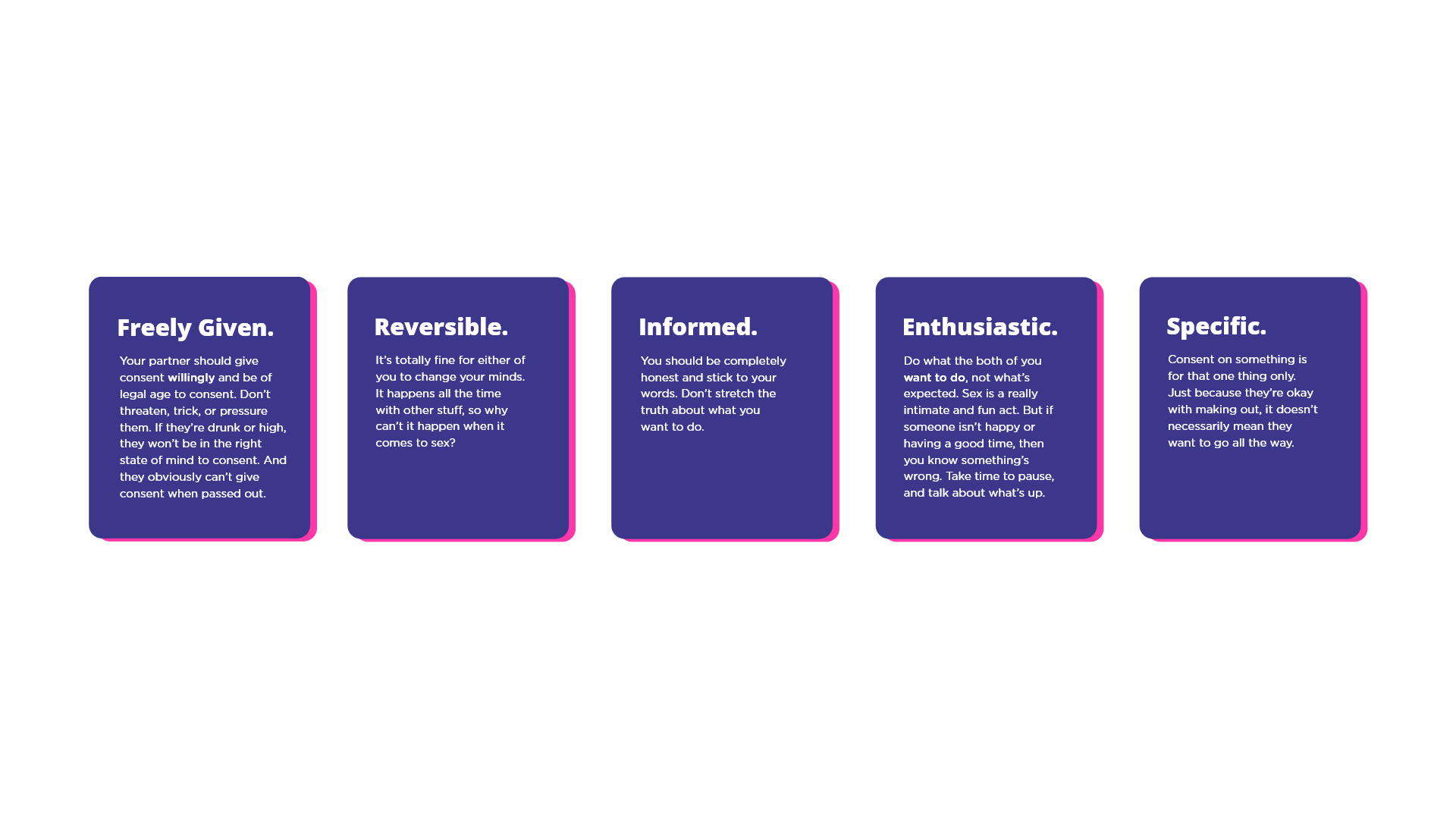
By breaking the different aspects of consent into manageable chunks, teens are given a brief overview of the entire topic before diving into the specifics.
Of note, the landing page discusses FRIES, an acronym conceptualized by Planned Parenthood to help people remember the characteristics of asking for consent. Our team felt that conveying FRIES would be beneficial to emphasize Durex's sexual well-being brand pillar.
Scenarios
To better understand consent, teenagers are given scenarios to follow through, and choices are provided to encourage reflecting on one's own actions. Scenarios are written with informal and approachable language, which helps teens naturally imagine themselves in the same situations.
Feedback
Feedback is given to help confirm understanding, regardless of whether teens get answers right or wrong. This allows them to reflect on their decisions, providing reassurance and encouraging them to reconsider their actions within scenarios.
Value
Why is it needed?
For high schoolers, our solution helps normalize the idea of sex by opening up conversation about consent between partners, teaching them how to foster healthy relationships. Meanwhile, this shift to safety and education allows Durex to solidify their stance as a sexual well-being brand.
Final Thoughts
This project had changed substantially since week 1, reaffirming how crucial it is to stay open to new ideas and to be willing to both rework and drop concepts when they no longer work. It also taught me how to think of design within the context of business needs and problems, rather than being driven solely by research to create innovative and joyful solutions.
Aside from looking into how to best onboard teenagers onto DurexEd, one area of improvement would be to implement additional ways to teach consent, as scenario-based learning may not be the most effective teaching method for all teens. Bringing in other relevant concepts like sexual assault and mutual respect could also help solidify the concept's focus on fostering sexual well-being and healthy relationships.