
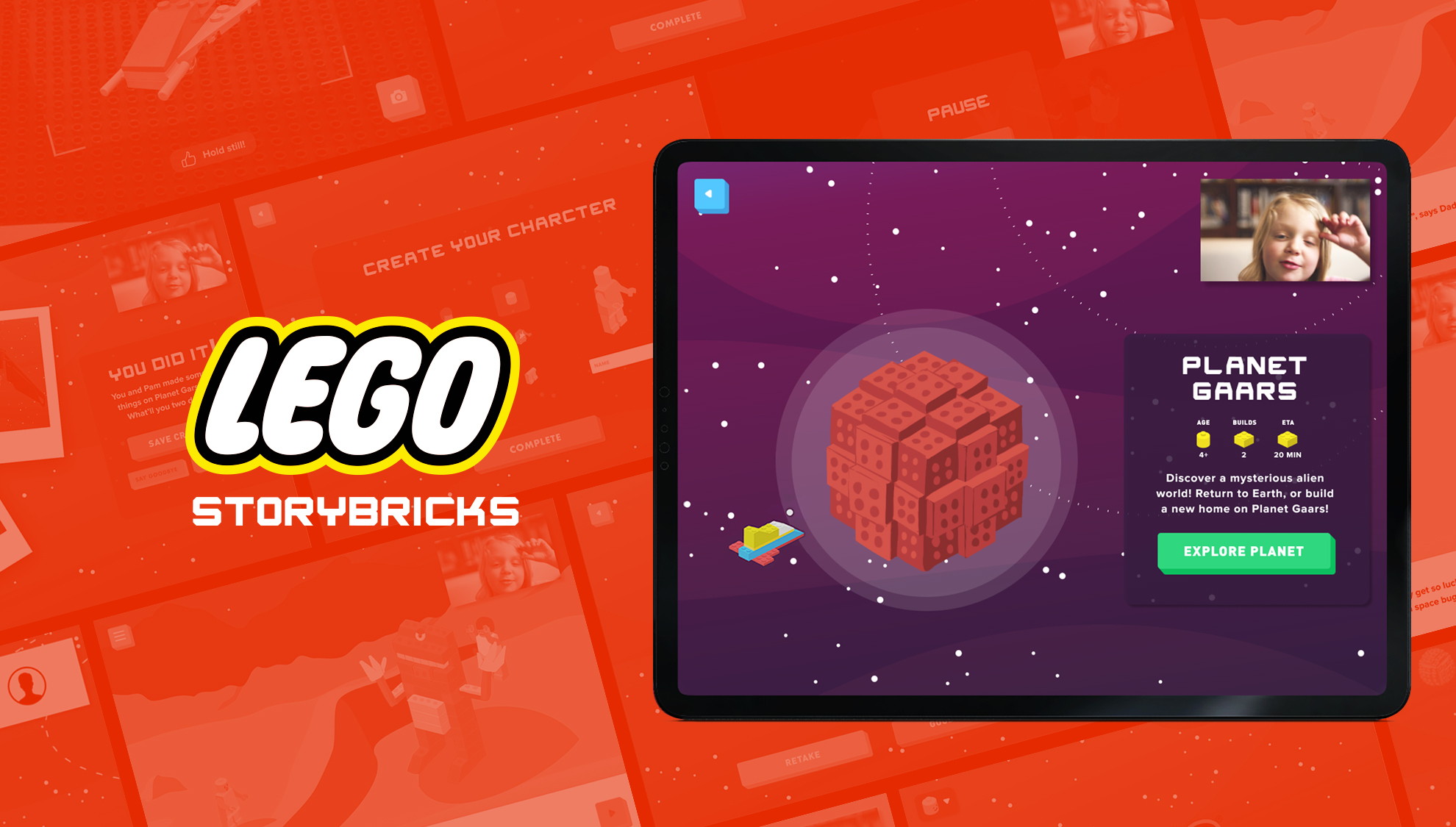
LEGO Storybricks
UX Design Student Project | March - April 2019
LEGO Storybricks is a conceptual tablet application that facilitates interactive storytelling by interweaving LEGO with communication technology. It aims to connect parents separated from their children by distance in order to maintain healthy relationships with their kids and to cultivate early childhood growth and development.
Note: Though this design concept utilizes LEGO and its brand, it is purely conceptual and is in no way affiliated with or endorsed by The LEGO Group.
Team
Ashwin Birdi
Project Manager
Delicia Li
Art Director
Tiffany Chan
Art Director
Arth Bhattarai
UI Designer
Kenneth Bruskiewicz
Copywriter
Roles
User Research
Data Analysis
UI Design
Prototyping
Copywriting
Animation
Tools
Illustrator
Photoshop
Xd
Figma
Domain Problem
Children undergo substantial growth in their early years, especially in terms of emotional development. However, parents can't be with their kids all the time, and the absence of a parent in their childhood years may cause children to develop feelings of neglect and resentment.
For parents constantly travelling for work, this means that they frequently become lonely, and have a greater need for consistent communication with their loved ones.
Brand Opportunity
Why LEGO?
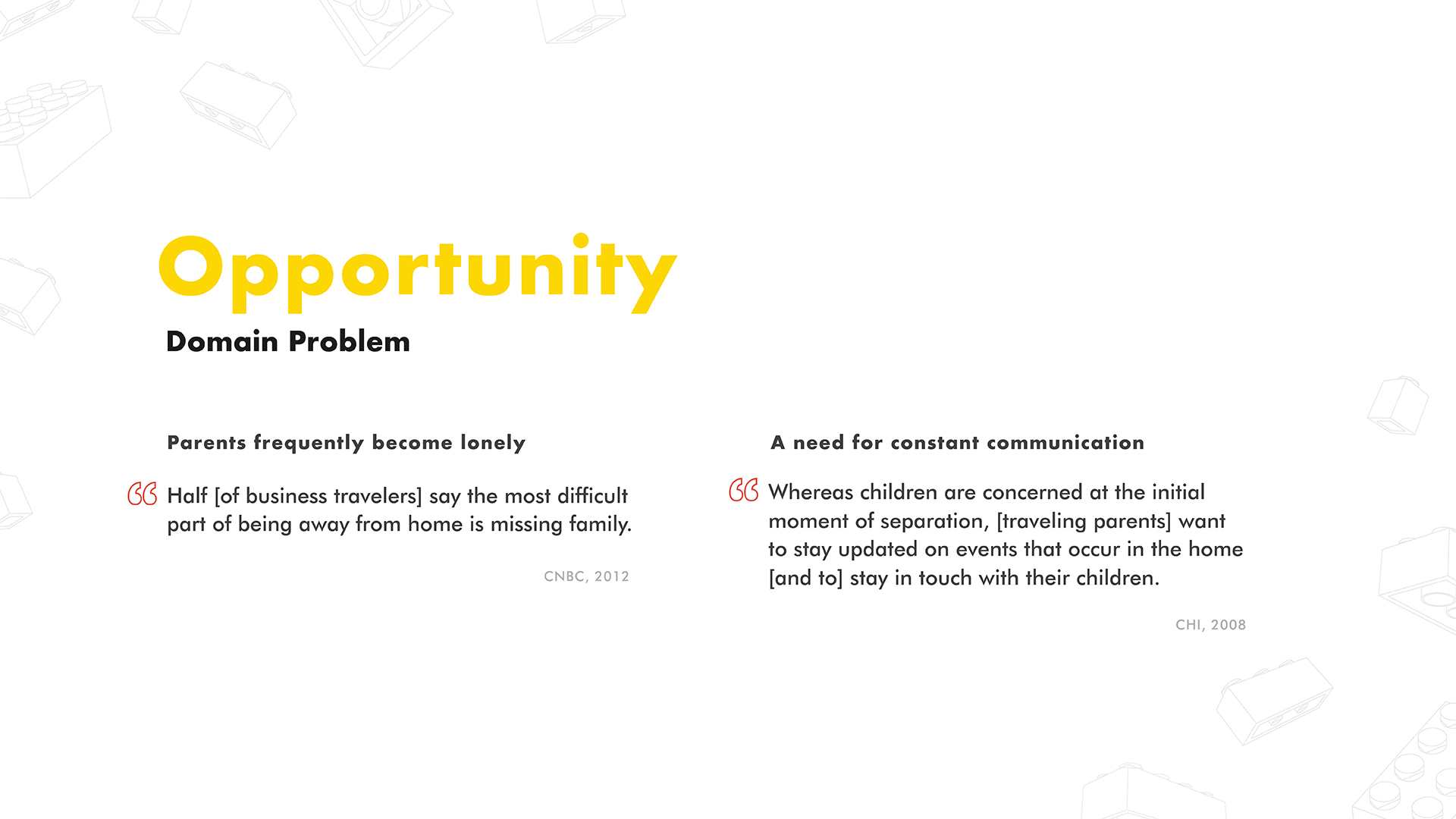
For nine decades, LEGO has engaged children with the bricks to express themselves, and have allowed for opportunities to bond with their parents, fostering their early childhood development.
Since the '90s, LEGO had been interweaving the physical and digital, and their expertise in this domain can be leveraged to help support children's growth by keeping families connected despite physical distances.
Research Insights
For qualitative research, I helped recruit interviewees, designed interview questions, and recorded data during user tests. I also designed survey forms and questions, and posted them to social media platforms such as Facebook and Reddit to gather quantitative data.
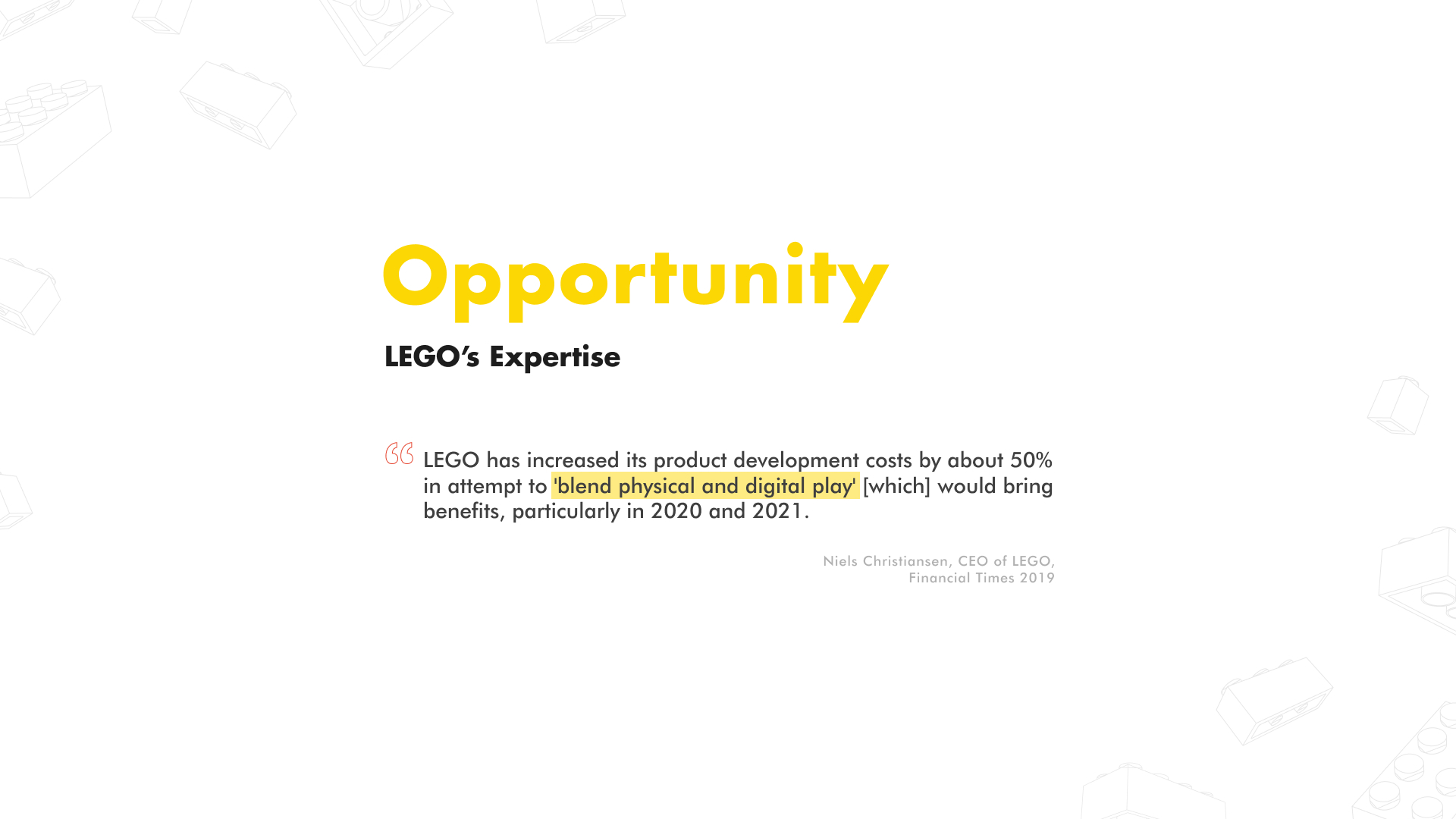
From the results of our qualitative and quantitative research, I helped analyze and summarize the data to identify the following insights: story telling inspires creation, distance prevents quality play, and toys evoke emotional expression. These findings lead us to our frame:
Personas
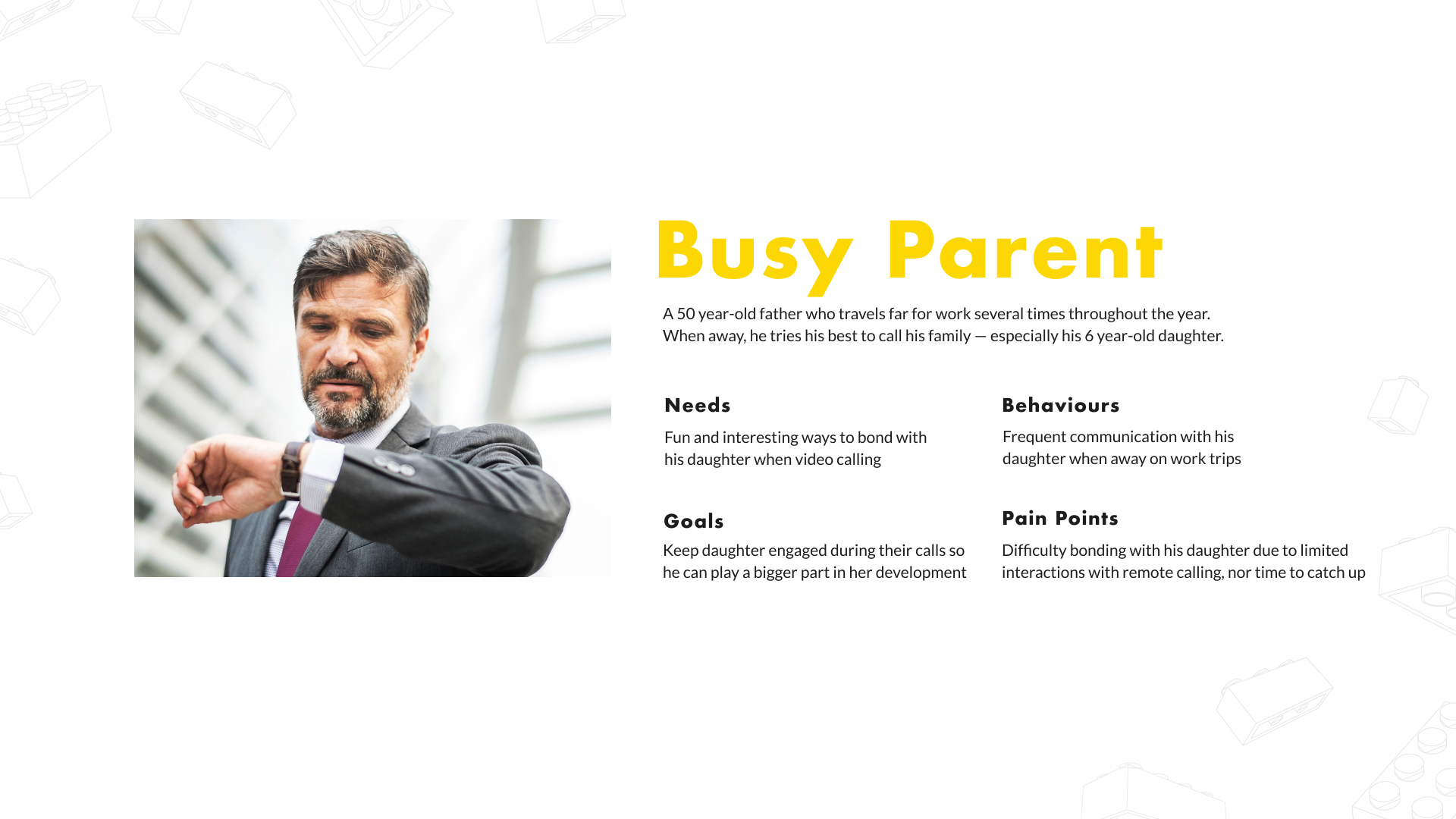
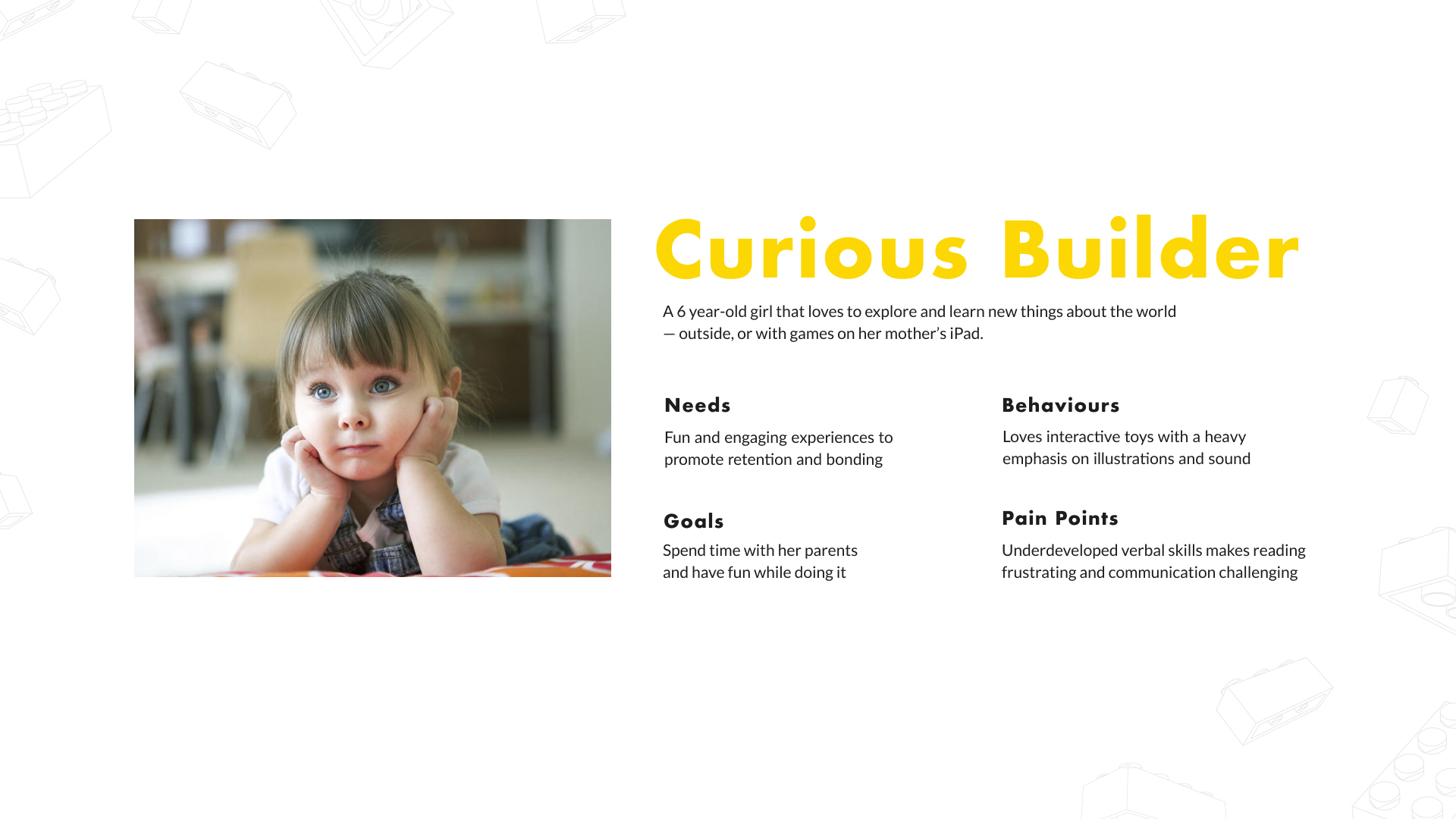
Using our research to create parent and child personas, we realized that to best support our target audience, our solution should be fun, engaging, and capable of aiding children's emotional development and their still-developing communication skills.
User Journey
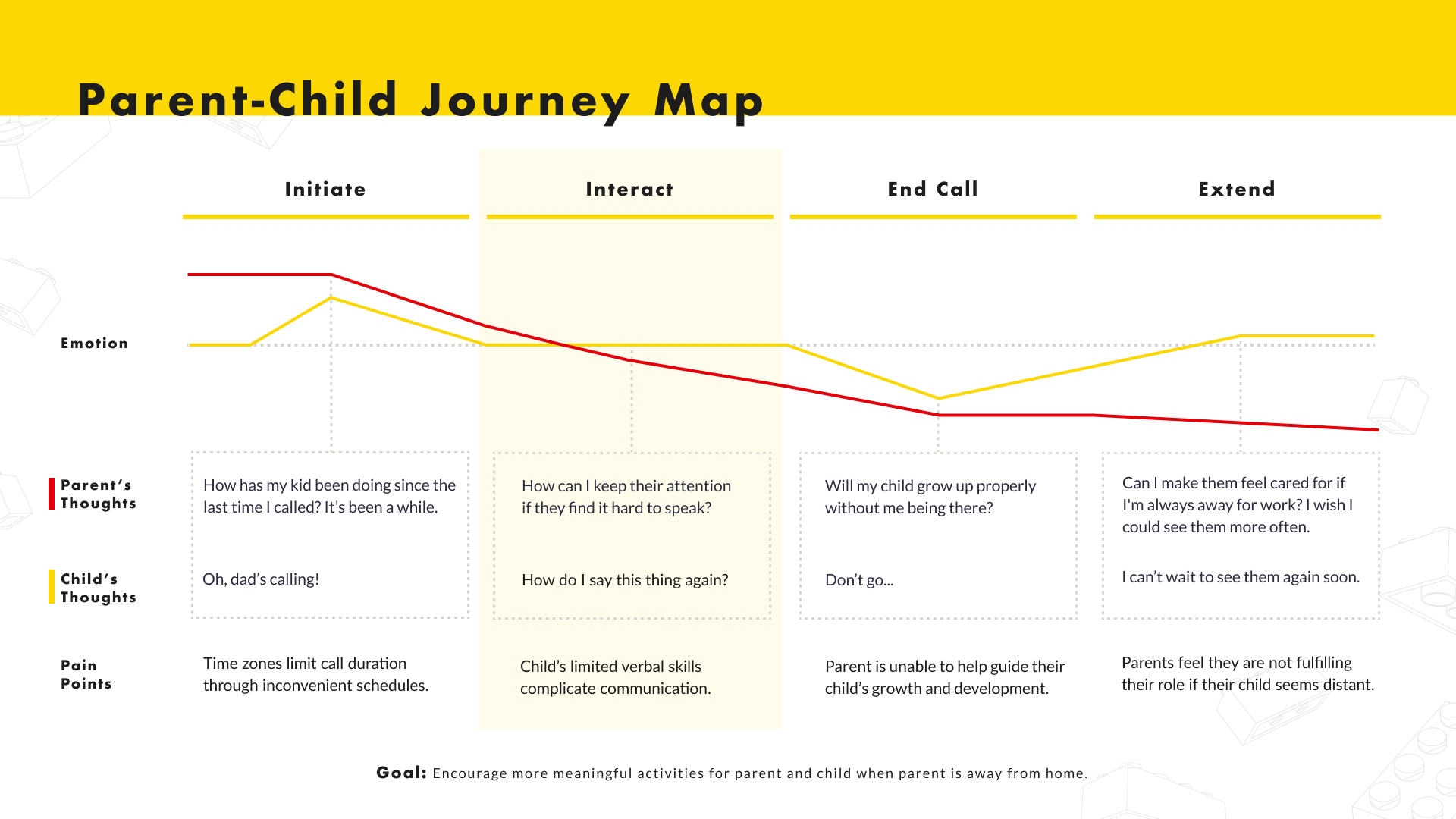
By mapping out the experience for both father and daughter, we found that children's developing vocabulary complicates communication. We decided to facilitate communication in the interaction phase to ensure that parents can continue making meaningful impact on their children's development.
Guiding Principles
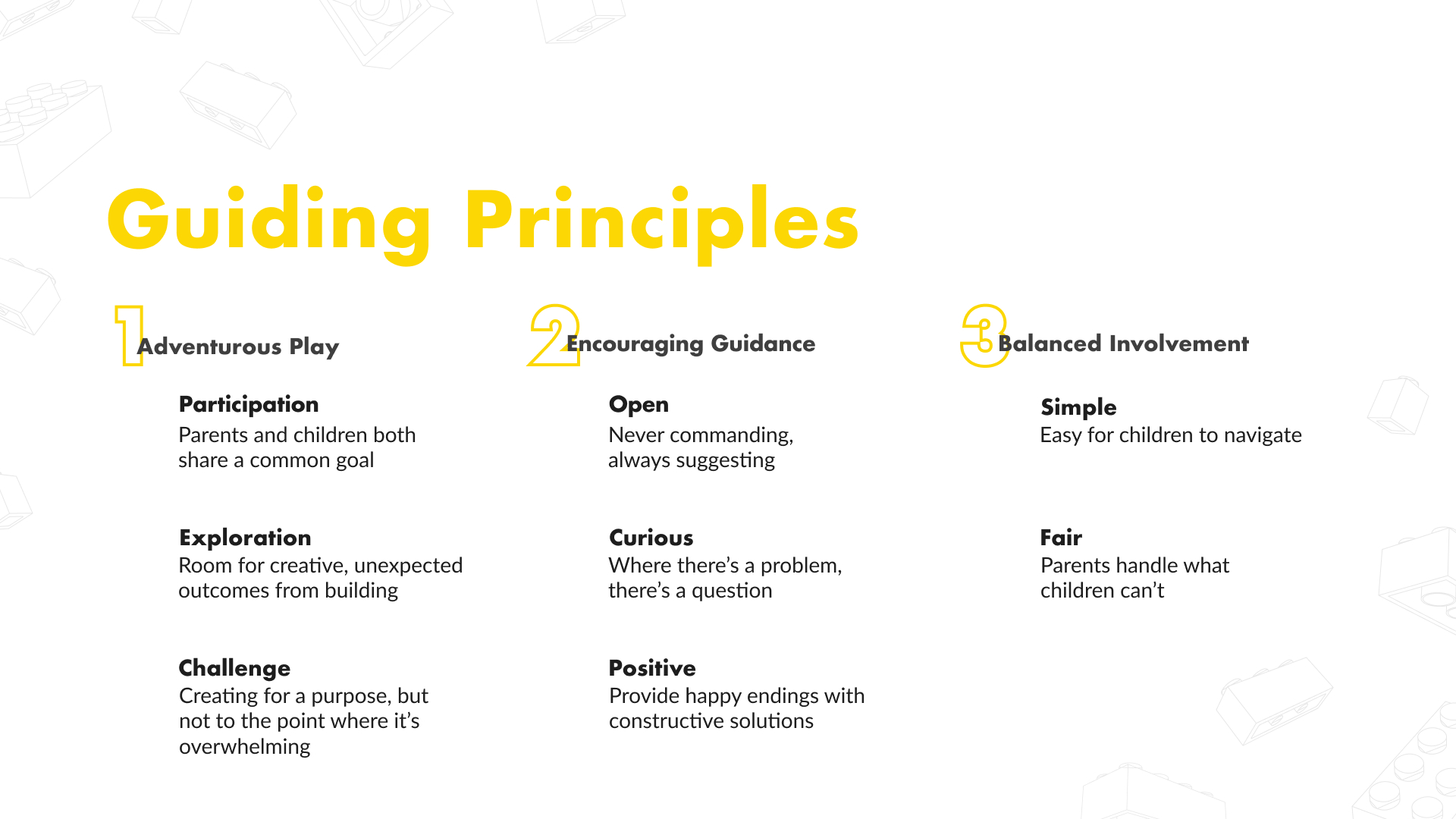
With our target audience and point of intervention determined, our team came up with three core principles that every aspect of our solution should embody: Adventurous Play, Encouraging Guidance, and Balanced Involvement.
Prototyping
UI Design & Animations
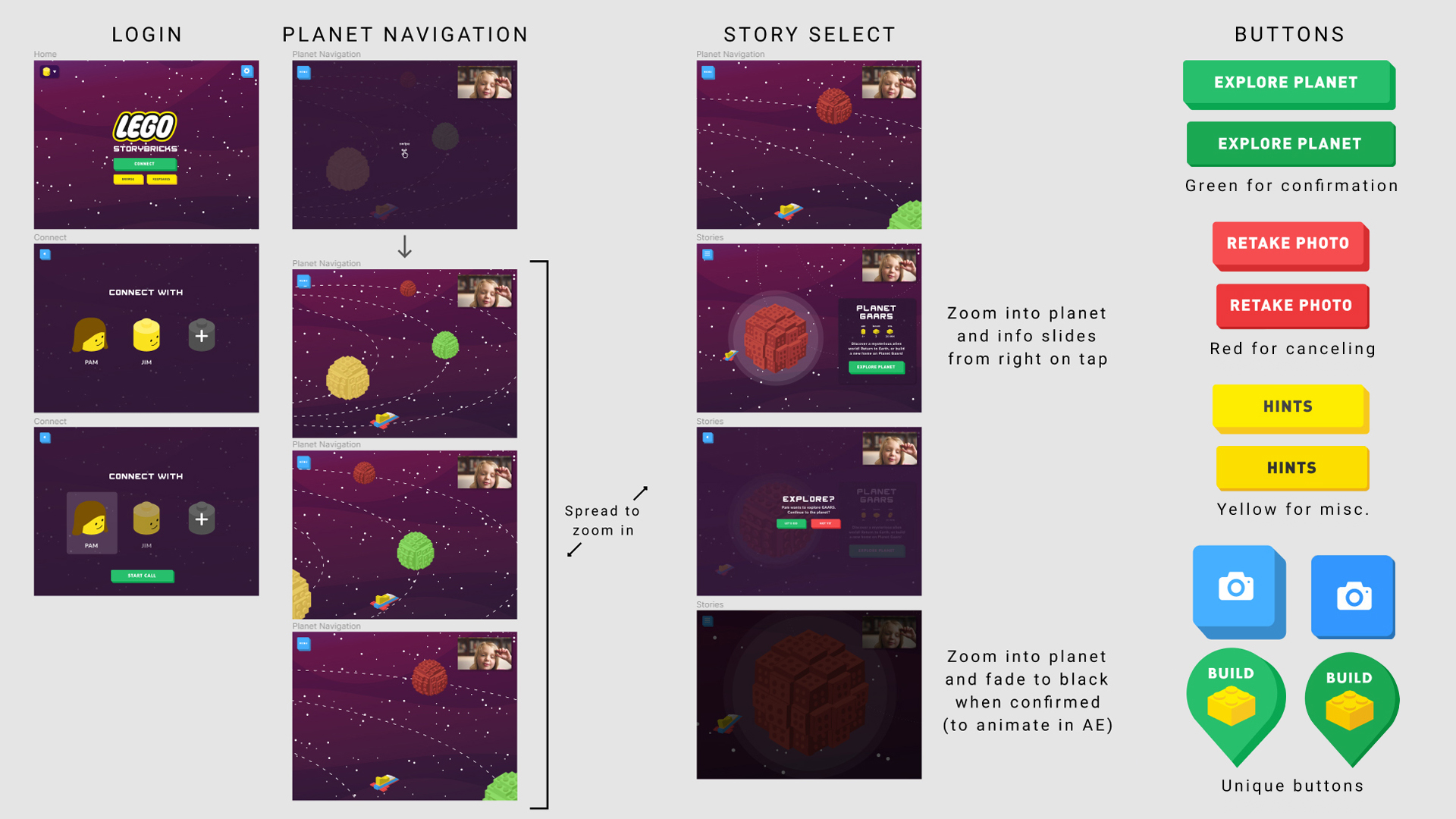
With the guiding principles in place, our team then focused on refining our concept's visuals. I was responsible for designing UI components, such as buttons, and screens like the login and story selection interface, as well as specifying their interactions. These were done using Figma.
I also assisted with writing copy for the application and project presentation slides. Adobe Xd was used to prototype and animate our application concept.
Solution
Planet Selection
Children choose which planets to explore which dictates the basic story premise. Meanwhile, parents confirm their children's choices by assessing a planet's total number of builds and estimated duration, allowing them to decide if it will provide a fair experience for their child.

Identifying Emotions
By giving children the opportunity to choose the facial expressions of characters, they learn to empathize with them without feeling any potentially negative emotions themselves. This allows them to explore a range of feelings while keeping their experience positive.
Build Moments
When it comes time to build solutions, playful animations and a large button are used to signify the important shift away from role-playing. In build moments, children are given the opportunity to build things to help overcome whatever problem the story presents them.
Both parents and children build LEGO models, but for the sake of fairness, and to emphasize the importance of their growth, the story will only progress once kids are done with their models to let them build at their own pace.
Saving Builds
At the end of a story, builds made for the story can be saved as stickers. For children, these act as mementos of time spent with their parents. For parents, this lets them look back at how their kids have grown over time in terms of communication, emotional intelligence, and creativity.
Value
Why is it needed?
For parents, our solution allows them to spend quality time with their kids and to remain involved as role models despite being far from home. For children, this learning experience allows them to bond with their parents, making them feel cared for.
As for LEGO, our solution leverages their expertise with toys in both physical and digital spaces, aligning itself with their goal of bringing parents and children together, one brick at a time.
Final Thoughts
Despite the short timeframe, this project taught me how to consider the needs and values of unfamiliar target audiences and how to design with them in mind. It reinforced the importance of identifying domain problems, as well as the methods to do so, and framing to create meaningful and satisfying experience design.
One area I would like to explore more is how to tactically introduce LEGO Storybricks to the parents and children who would need it most. My team and I thought to establish an entry point via digital receipts, but I feel that the idea was very transaction-centric. I also want to refine the interfaces and concepts behind saving builds to further accentuate the aspects of bonding and quality play.